
Education & Global Development
What Africa Can Learn From China’s Investment in Its Youth
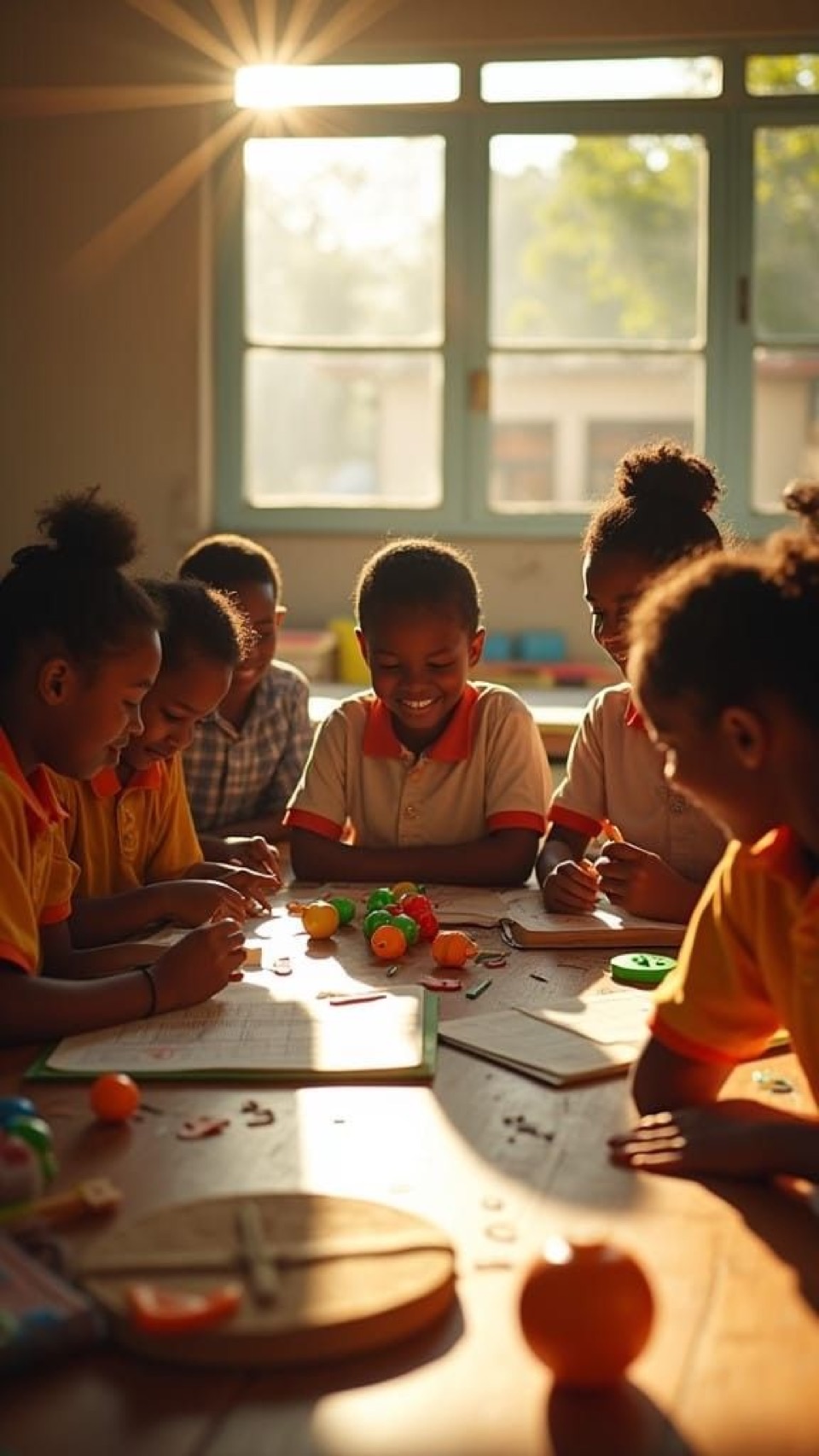
What would we choose to celebrate if a country’s progress were measured by what an ordinary child could understand, explain and do? We might spend less time admiring skylines and more time asking what happens in classrooms. That is where my thoughts kept returning when I considered what African countries could learn from China’s experience.
Infrastructure and technology are visible signs of development. The patient work that makes people capable of building and using them is easier to overlook. My experience of China left me thinking about mathematical reasoning, communication, problem-solving and confidence. It was a personal impression, not a comprehensive judgement of its education system. But it prompted a question that matters at home: how much of our ambition for the future is matched by investment in the people expected to build it?
One estimate makes that question difficult to avoid. The 2022 State of Global Learning Poverty report, produced by the World Bank and partners including UNESCO and UNICEF, projected learning poverty of about 89% in Sub-Saharan Africa following pandemic disruption. The measure concerns children unable to read and understand a simple text by age ten, including children out of school. This was a modelled 2022 estimate, not a fresh measurement of every child or a current figure for every African country.
Even with those qualifications, it forces a change of emphasis. What does a promise of digital opportunity mean to a child who has not been helped to read confidently? We can announce ambitious plans for advanced technology while leaving the foundations of participation unfinished. The problem is not a shortage of potential in children. It is whether our institutions give that potential a fair chance to develop.
Learning without copying
I am cautious when conversations about development become a list of things African countries should copy. China has its own history, institutions, culture and economic circumstances. African countries have different circumstances from China and from one another. A policy or practice that produces a result in one place may work very differently elsewhere.
What interests me is the thinking behind a choice. Which capabilities have people decided to prioritise? Where have they directed resources? What can we learn from those decisions, and what would need to change for an approach to serve a particular community? Understanding the conditions behind an outcome gives us something more useful to work with than admiration for the outcome alone.
That care should change the way we borrow educational ideas. What would a particular approach ask of teachers, and have they been given the time, materials and support to deliver it? Would it work for a child learning in a different language from the one spoken at home? Before a policy is impressive in a presentation, it has to be workable on an ordinary school day.
The opportunities behind the skills
I spend a lot of time thinking about artificial intelligence and new technology, so I understand the excitement around them. But I keep returning to the abilities that help someone make use of an opportunity in the first place. Can they explain their thinking? Can they ask a question when they do not understand? Do they feel able to attempt something unfamiliar and learn from getting it wrong?
Communication touches almost every part of working life: introducing yourself, explaining an error, making a proposal or disagreeing with someone more senior. Yet confidence can be mistaken for a personality trait that young people either have or lack. How much of what we call confidence is the result of having been listened to, corrected constructively and given another chance to speak? That is something adults can make room for.
Developing them takes more than encouraging people to work hard. Young people need access to education and chances to practise, but they also need people who will take an interest in their progress. That might be a mentor who gives thoughtful feedback, an introduction to an unfamiliar industry or an opportunity to see how a workplace operates. Travel can offer another form of exposure, although it is far from the only one.
Exposure is valuable when someone is helped to make sense of it. A visit to a workplace can leave a young person impressed but no clearer about how to enter that field. What would they need to study? What does the work involve on a difficult day? Who could review a first attempt? Those follow-up conversations turn an interesting experience into a possible next step.
What we can open up for someone else
This is where the conversation becomes personal for founders and leaders. Building a business or a professional network puts us in contact with people and environments that may be difficult for someone younger to access. We can think more deliberately about how to share that access, whether through mentorship, introductions or opportunities to learn alongside us.
This is also where we should examine our motives. Are we offering an opportunity because it helps a young person, or because it allows us to feel generous? A photograph of a mentoring event tells us very little about what happened afterwards. I would rather ask whether someone received useful feedback, gained a skill or found a person they could contact again. The answer may be less visible, but it is closer to the purpose.
Founders cannot take the place of functioning education systems, and a few introductions will not solve a regional learning crisis. We can still be accountable for the access we control. Before the next conversation about Africa’s potential, I would ask a more immediate question: who has a better chance because of something we are doing, and how would we know? That question gives our optimism a task.